Iceland’s emphasis on midwife-led care reflects both cultural traditions and a strong healthcare system designed to prioritize the well-being of mothers and babies. Midwives play a central role in routine prenatal care for all pregnancies. This structure aligns with Iceland’s broader healthcare philosophy, which focuses on accessibility and minimal intervention while maintaining high-quality outcomes.
When a woman in Iceland discovers she is pregnant, her first step is typically scheduling an appointment with a midwife. Unlike in some countries where obstetricians lead prenatal care, midwives oversee most routine care pregnancies in Iceland. Women generally meet with their midwife for first time around 9 to 11 weeks into pregnancy, although some may see an obstetrician earlier for confirmation or an early ultrasound, as midwives do not conduct ultrasound.
First Meeting (9–11 Weeks)
- Health History: The midwife reviews the mother’s and partner’s family medical history to identify any genetic concerns.
- Blood Work: Standard tests include blood typing (Rh factor), hemoglobin levels, STS panel and glucose.
Ongoing Check-Ups
- Scheduled around from 12 weeks, once a month or 7-10 appointments together, and every 2–3 weeks in the last month, or ofter if needed.
- Visits include monitoring the baby’s heartbeat (from ~16 weeks), measuring uterine growth (from ~20 weeks), checking blood pressure, and testing urine for protein.
- During the 16-week examination, a screening for depression and anxiety may take place.
- Vaginal exams are conducted only if medically indicated (e.g. pre-term labour or infection)
Scans
- A 12-week ultrasound assesses fetal development and offers optional genetic screening.
- The 20-week morphology scan evaluates the baby’s growth, organ structure, and overall health.
- More scans if there are medical indications.
High-Risk Considerations
For pregnancies with complications such as gestational diabetes or preeclampsia, preterm labour, the midwife refers the mother to an obstetrician. Women expecting multiples or with previous complications receive closer monitoring at hospitals with specialized obstetric teams.
Short version of Classification of Birth locations in Iceland
In 2007, the Directorate of Health in Iceland issued guidelines on choosing a birth location. Birth facilities across the country were categorized from A to D based on the level of care and services provided:
A-Level Birth Location:
- Landspítali University Hospital in Reykjavik.
- Specialized in high-risk maternity care and births.
- Neonatal intensive care unit available from 22 weeks of gestation.
B-Level Birth Location:
- Akureyri Hospital.
- Also specialized in high-risk maternity care and births.
- Neonatal intensive care available from 34 weeks of gestation.
C-Level Birth Location:
- Facilities in Akranes, Ísafjörður, and Neskaupstaður.
- Medium-sized maternity wards with 24-hour surgical services available.
D-Level Birth Location:
- Locations include Selfoss, Vestmannaeyjar, Keflavík, and home births.
- Maternity wards primarily serve women with low-risk pregnancies and births.
- No surgical services are available. Home births are also classified under this category.
This classification helps expectant mothers make informed decisions about their birth location based on their specific needs and risk levels.
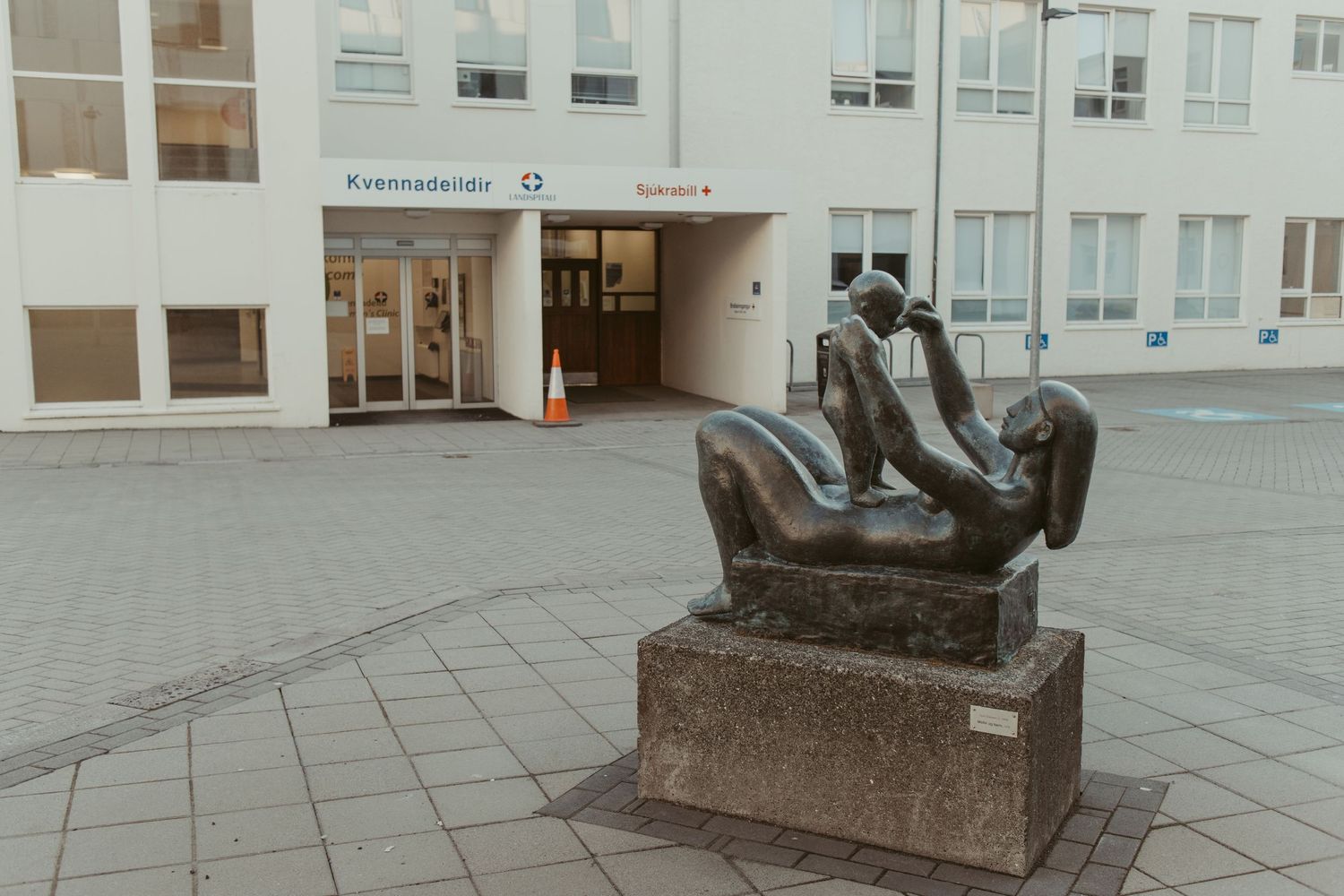
More detailed classification and health care down below
Women in Iceland have several choices regarding their place of birth, depending on their risk level, geographic proximity to facilities, and personal preferences. Factors such as the distance to a hospital, the availability of transportation, and the preference for a home like setting versus a clinical environment can influence the decision.
Choosing a Birth Place
Large Hospitals
- Reykjavík : Specialized maternity ward where midwives, obstetricians, and gynaecologists work. Equipped with epidural, C-section only if needed, and neonatal care for both low- and high-risk pregnancies, or if birth starts before 34 weeks.
- Akureyri : Specialized maternity ward where midwives and obstetricians and gynaecologists work. All women can choose to give birth at Akureyri Hospital, but the pregnancy must have reached 34 weeks, also possible if it is multiple pregnancies, breech position, epidural anesthesia is available if you wish.
- Akranes : You are healthy, and the pregnancy has been without serious risk factors. Pregnancy length is at least 37 weeks. You are carrying one baby that is in the head-down position. Epidural anesthesia is available if you wish.
Smaller Hospitals
- Selfoss, Ísafjörður, Reykjanesbær,Neskaupstaður
- Smaller hospitals or maternity wards provide low-risk pregnancies of at least 37 weeks, with a single baby in a head-down position. They emphasize comfort measures such as baths, birthing pools, massage, hot and cold compresses, and relaxation techniques suited to individual preferences. These facilities typically offer fewer medical interventions and prioritize a natural birthing experience. In cases of complications, they ensure prompt transfers to larger hospitals equipped for more specialized care.
Access to an operating room 24/7 and epidural anesthesia is available at Ísafjörður and Neskaupstaður.
Personalized Delivery Rooms:
Once the midwives determine that you are staying in the maternity ward, you will have your own delivery room. This room is yours for the duration of the birth, ensuring privacy and consistency in your environment.
Midwifery Care:
Births in Iceland are primarily attended by midwives, who work in 8 hour shifts. If the hospital is short staffed, shifts may extend to 12 hours, but this is rare. Since midwives rotate shifts, it’s common to meet more than one midwife during a birth, especially if labor extends over many hours. Each midwife continues the care seamlessly from where the previous one left off.
Doctor Involvement (where they are available)
Obstetricians or doctors step in only when necessary, such as for consultations or in the case of a medical emergency. For most births, midwives handle all aspects of care, emphasizing the natural and physiological processes of birth.
Independent Birthing Centers : Björkin and Fæðingarheimili Reykjavíkur or home birth
A birthing center provides midwife-led care focused on non-pharmacological pain relief, such as birthing pools, massage, TENS, and hot or cold compresses, along with relaxation techniques. Families typically return home 4-6 hours after birth, with midwives offering follow-up care at home in the early postpartum days. Prenatal visits with a midwife usually begin at 34 weeks to prepare for a positive birth experience.
Fæðingarheimilið
offers two birthing suites that are equipped with a private bathroom, a birthing pool, and direct access to a beautiful garden, allowing mothers to enjoy fresh air and a calming natural setting.
The birth home regularly hosts open houses to help families familiarize themselves with the space and the midwives.
Björkin
Offers two birthing spaces that are designed to create a calm and private atmosphere. Shared lounge and kitchen access so families can use the cozy lounge area and a small kitchen, providing added convenience and a home-like feel.
Home Births
Midwives provide personalized care for home births, with access to nearby hospitals if needed. Home birth is an option for healthy, low-risk pregnancies (37-42 weeks) with a single, rarely multiple, head-down baby. Benefits include a familiar, relaxing environment, continuous care from your midwives, your partner's presence throughout, and reduced need for interventions. Comfort measures like baths, birthing pool at your home comfort, massage, TENS, and hot/cold compresses are available.
Towards end of birth, when baby is almost born, there is a rule that two midwifes have to attend.
When birth starts
- Hospitals and birthing homes: Women contact chosen place when contractions intensify or waters break. Upon arrival, midwife check blood pressure, contraction patterns, fetal heart rate and dilation of cervix. Then it’s decided if woman stays or she can go home.
- Home births: Woman contacts chosen midwife, consult on phone or midwife arrives to do check up and stays if it’s necessary, or leaves to come later, or stays when it’s for example active phase, depending of situation.
Pain Relief Options:
- Epidurals (in large hospitals).
- Nitrous oxide, morphine, acupuncture or pethidine (in smaller facilities).
- TENS machines available only privately, birthing centers or rent. Some doulas own Tens machines as well.
Interventions:
- Inductions only if pregnancy is prolonged 41+5 or 42 weeks, or only by medical reasons as preeclampsia, gestational diabetes or other.
- vacuum extractions, and C-sections are performed only when medically necessary
Births and support team
Maximum of Two Support People:
A birthing woman is allowed to have up to two people accompany her during the birth in hospitals. This ensures the room does not become overcrowded and allows the medical team to move freely.
• A doula can always be one of these two support people, ensuring continuous support for the birthing mother.
• The mother decides who the other person will be, whether it’s her partner, a family member, or a friend.
Birthing Homes and Facilities:
In birthing homes or facilities like Fæðingarheimilið or Björkin, family members are also allowed as long as the mother consents. These spaces are designed to accommodate the mother’s preferences, offering a more personalized and flexible environment.
Home Births:
There are no restrictions on the number of people who can attend a home birth. The mother can choose to have it as private or as inclusive as she wishes, inviting close family members, including children, to be part of the experience.
Postpartum in Iceland
Hospital Stay
- After a vaginal birth, mothers typically stay 4–24 hours, extending to 48–72 hours after a C-section.
- In larger facilities you might have to share a room with another mother and her baby.
- Family room are available, but they are not guaranteed.
- In smaller facilities there are usually one to two postpartum suits where midwives take care of you until you are ready to go home.
Midwife Home Visits
Midwives visit 7–10 times, within 12-16 hours after you left birthing place, in the first weeks to monitor maternal recovery and newborn health, including feeding, weight gain, and signs of yellowing. You have an option to choose your home visit midwife before birth, if you haven’t hospital will find one for you.
Check ups
- At 5–7 day postpartum, babies undergo hearing tests and weight checks at children hospital or local health center.
- Until 6 weeks midwife and nurse is coming to your home, when baby reaches 6 weeks both mother and baby go to health center for a check-up, including postpartum depression screening for the mother.